

From Jutsu to Do: The Path to Self-Perfection

Updated: Mar 30
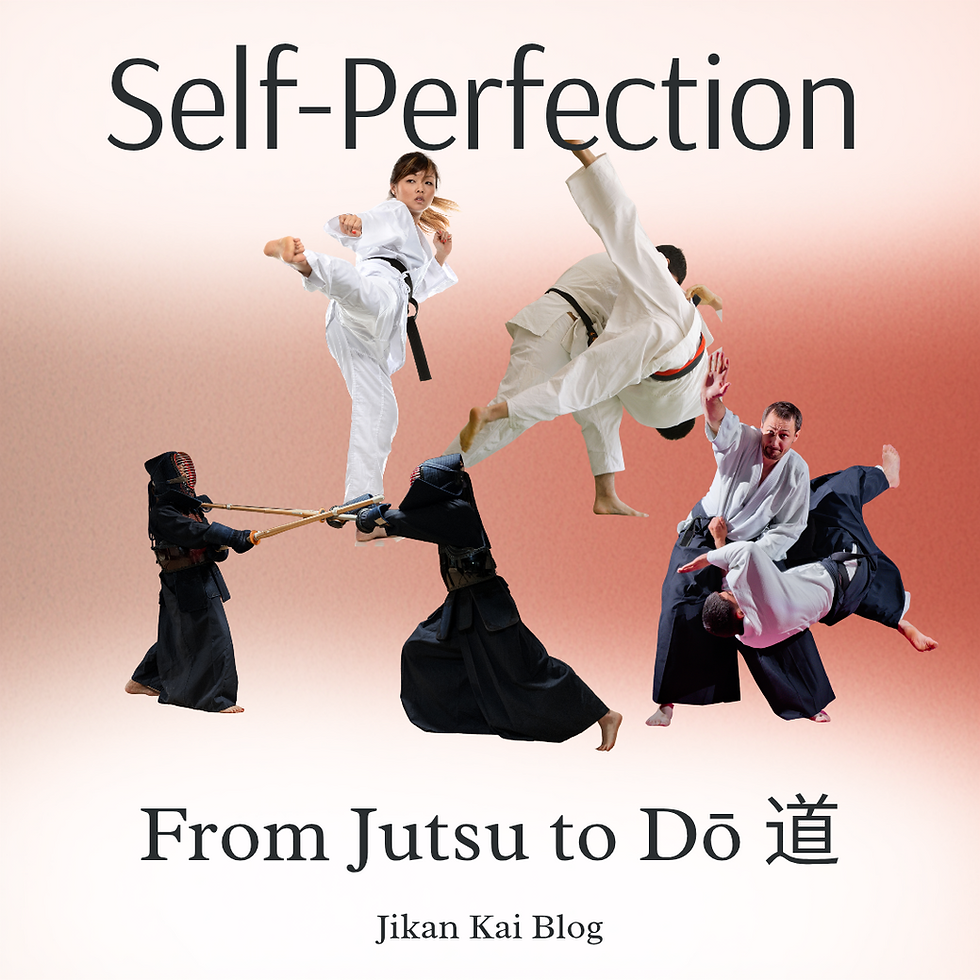
In the history of Japanese martial arts, there is a fundamental split between learning to survive and learning to live. For centuries, combat was purely about practical results on the battlefield—this was known as Jutsu (meaning "science" or "technique"). However, as Japan transitioned into a modern society, these lethal skills evolved into Dō (meaning "The Way"), turning tools of war into a path for personal growth.
The Meiji Pivot
To understand why this shift happened, we must look to the Meiji Restoration (1868). Before this era, Japan was a collection of feudal domains defined by constant warfare. Martial practices were strictly utilitarian; if a technique didn't work in a life-or-death struggle, it was useless.

When Japan modernized, the samurai class was abolished and swords were banned. Martial arts had to evolve or vanish. Consequently, they transitioned from Bujutsu (warrior techniques) into Budō (the warrior way).
The Zen Influence

This evolution was fueled by Zen Buddhism, which transformed physical drills into a form of "moving meditation." The goal shifted from defeating an external enemy to overcoming the internal enemies: ego, fear, and hesitation.
The character for Dō 道 is the same as the Chinese Tao, implying an endless journey of refinement. Zen philosophy introduced several key concepts to the "Way":
Mushin (No-Mind): A state of mind where the practitioner is fully present and acting intuitively, free from the "clutter" of analytical thought.
Self-Discipline: In the Jutsu era, laziness meant death. In the Dō era, discipline is practiced to forge the spirit, using the body as a whetstone to sharpen the character.
The Dojo as a Sanctuary: The word Dojō literally means "Place of the Way," a term originally used for Zen meditation halls. By adopting this name, martial arts schools became spaces for moral and spiritual awakening.
Modernization
By framing these arts as "Ways," founders like Jigoro Kano (Judo) and Gichin Funakoshi (Karate-do) adapted them for modern society, where the public valued life-long self-cultivation over the brute survival methods of a feaudal past.
Dō arts became essential tools for physical education and moral grounding in a rapidly Westernizing world, ensuring that the ancient warrior spirit survived as a peaceful pursuit of excellence.
Here's a brief video on Do/Dou 道 in Japanese society:


Comments